

Thailand’s travel industry is not simply moving through another demand cycle — it is undergoing a structural change in how travelers research, plan, and book trips.
Across Thailand, we are seeing a clear pattern: rates are adjusting more frequently, promotions are becoming more tactical, and booking windows are compressing. At the same time, travelers are becoming more informed, more patient, and more value-driven.
Recent research from Marriott confirms what many Thai hoteliers already experience daily: travelers are increasingly taking a “wait-and-see” approach. While travel intent remains strong, booking decisions are often delayed until the right price or opportunity appears.
This shift is not driven by lower desire to travel, quite the opposite.
Strong Travel Demand, But More Flexible Decisions
Travel appetite remains high. Globally, nearly 6 out of 10 consumers have recently taken a leisure trip, and many travel multiple times per year. Thailand continues to benefit from this demand — especially from regional Asian markets, long-stay travelers, and last-minute bookers.
However, plans are becoming fluid:
-
Travelers research earlier
-
They compare more options
-
They wait longer before confirming
-
They react quickly when prices move in their favor
This creates a paradox for hotels: interest is strong, but certainty is weaker.
Google Makes Travelers Even Smarter
While hotels across Thailand actively adjust rates to manage demand, Google has introduced a powerful new behavior driver.
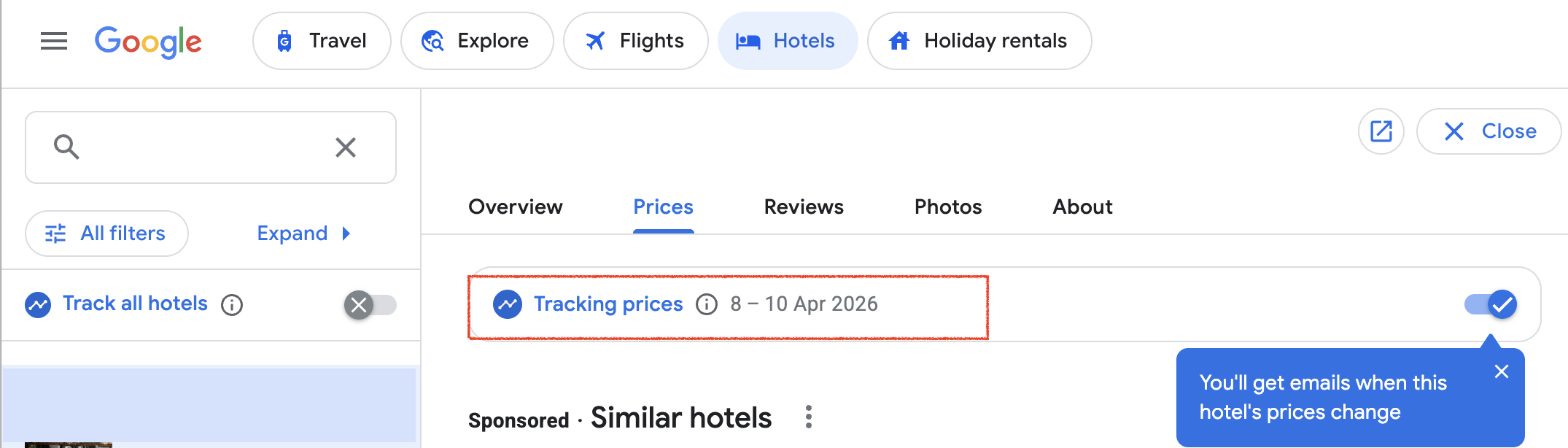
Travelers can now track their preferred travel dates and receive alerts when prices change. This means guests are no longer passively searching — they are actively monitoring hotels and destinations.
The impact is significant:
-
Guests wait longer, knowing they’ll be notified
-
Rate drops trigger instant booking decisions
-
Pricing volatility becomes more visible to consumers
In short: the guest is now watching the hotel — not the other way around.
For Thai hotels, this increases both opportunity and risk. Smart pricing can capture demand quickly, while inconsistent strategies can train guests to wait for discounts.
Last-Minute Bookings Are Not “Uninformed” Bookings
A shorter booking window does not mean less research.
Studies from Expedia show that travelers view hundreds of pages across several weeks before finally booking. Many spend more time researching than they did a year ago — even if the final booking happens just days before arrival.
In Thailand, this behavior is amplified by:
-
Social media discovery (Instagram, TikTok, YouTube)
-
OTA comparisons
-
Google Hotel Ads and price alerts
-
Reviews and reputation signals
The booking moment may be fast — but the journey leading up to it is long and non-linear.
What This Means for Thai Hoteliers
Traditional marketing funnels no longer apply. Today’s traveler enters and exits the decision process multiple times, across multiple platforms.
To stay competitive, hotels in Thailand must adapt in three key ways:
1. Use AI-Driven Insights, Not Monthly Reports
Waiting for end-of-month results is no longer enough. Demand signals, pricing shifts, and consumer intent now change daily — sometimes hourly.
AI-powered tools allow hotels to:
-
Detect demand changes early
-
Understand why performance shifts occur
-
React before opportunities disappear
2. Measure the Full Guest Journey
Last-click attribution misses most of the story. Thai hotels need a holistic view that connects:
-
Search behavior
-
OTA exposure
-
Website visits
-
Price competitiveness
-
Actual revenue and lifetime value
Only then can marketing and revenue decisions align with real business outcomes.
3. Move to Always-On, Adaptive Strategies
The most successful hotels are moving away from fixed campaigns and toward always-on, AI-assisted strategies that adjust pricing, messaging, and distribution in real time.
This includes:
-
Dynamic promotions
-
Flexible cancellation messaging
-
Value-driven offers instead of blanket discounts
-
Rapid creative testing based on guest behavior
Turning Uncertainty Into a Competitive Advantage
Uncertainty is no longer temporary — it is permanent.
Hotels in Thailand that embrace AI-powered agility, smarter pricing, and data-driven marketing will not only protect revenue but gain a competitive edge. Those that rely on static strategies risk training guests to wait — or worse, book elsewhere.
The future belongs to hotels that understand how travelers think today, not how they booked yesterday.
Because the real question is no longer if the market has changed —
but how quickly your hotel can adapt and benefit from it.
Source: Phocus Wire